
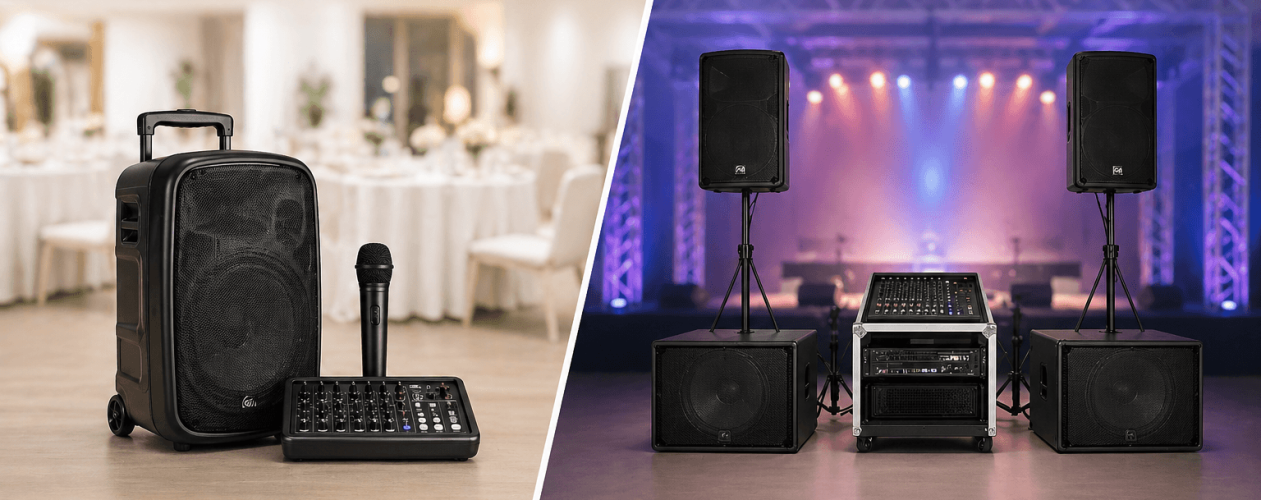
When hiring a PA system for an event, one of the most important decisions is whether you need a sound engineer to operate the equipment or whether you can manage it yourself.
For some events, a straightforward speaker and microphone setup is all that’s required. For others, having a dedicated sound engineer can be the difference between a professionally delivered event and one plagued by technical interruptions, uncomfortable feedback and poor sound quality.
The decision isn’t always determined by the size of your event. A corporate presentation for 50 people with multiple speakers, video presentations and remote participants can be technically more demanding than a birthday party for 150 guests.
At PA Systems Hire, we believe customers should understand what they’re paying for and why they might need additional technical support.
This guide explains what a sound engineer does, when you need one, when you can manage without one and how to make the right decision for your event.
What Does a Sound Engineer Actually Do at an Event?
Many people assume a sound engineer simply stands behind a mixing desk and adjusts the volume. In reality, their responsibilities often begin well before the first guest arrives.
A professional sound engineer is responsible for managing the audio environment throughout your event, ensuring that microphones, speakers, music and other audio sources work together effectively.
Depending on the event and agreed scope of work, their responsibilities may include:
- Assessing the venue and its acoustics.
- Positioning speakers for consistent audience coverage.
- Setting up and testing audio equipment.
- Configuring wireless microphones.
- Conducting soundchecks with presenters and performers.
- Balancing speech, music and presentation audio.
- Managing microphone feedback.
- Controlling audio transitions between speakers.
- Monitoring sound levels throughout the event.
- Troubleshooting technical problems.
- Coordinating with event organisers, DJs, performers and other AV technicians.
The engineer effectively becomes responsible for the technical delivery of your event’s sound, allowing you to concentrate on managing the event itself.
Dry Hire vs PA Hire With a Sound Engineer
When requesting a PA system hire quotation, you may come across the term dry hire.
Understanding the difference between dry hire and managed hire can help you choose the most appropriate service.
| Feature | Dry PA Hire | PA Hire With Sound Engineer |
|---|---|---|
| Professional audio equipment | Included | Included |
| Equipment operation | Customer | Sound engineer |
| Delivery and collection | Optional | As agreed |
| Professional installation | Optional | Usually included |
| Soundcheck | Customer or setup technician | Engineer |
| Live microphone management | Customer | Engineer |
| Technical troubleshooting | Customer or remote support | On-site engineer |
| Audio adjustments during event | Customer | Engineer |
| Best suited for | Straightforward events | Complex or high-profile events |
| Overall cost | Generally lower | Higher due to technical staffing |
There is also a middle-ground option: having your PA system professionally delivered, installed and tested, with a demonstration of how to operate it before the technician leaves.
This can be particularly cost-effective for customers who want professional equipment without paying for an engineer to remain on-site throughout the event.
When You Probably Don’t Need a Sound Engineer
Not every event requires dedicated technical support. In many situations, modern PA systems are straightforward enough for customers to operate themselves.
Small Private Parties
If you’re organising a birthday party, anniversary or family gathering and simply want to play music from your phone or laptop, a compact PA system may be sufficient.
Once the equipment is connected and the volume is set, very little adjustment may be required.
Small Business Meetings
A meeting involving one presenter, a wireless microphone and a small audience can often be managed without an engineer.
If the equipment has been professionally installed and tested beforehand, the organiser may only need to switch the microphone on and off.
Wedding Ceremonies and Simple Speeches
Some wedding ceremonies and receptions only require a microphone for speeches and occasional background music.
A straightforward PA package with professional setup may be perfectly suitable, provided someone is comfortable operating the equipment.
However, weddings involving multiple audio cues, outdoor ceremonies or live musicians may require additional support.
Fitness Classes and Community Activities
Fitness instructors, yoga teachers and community group leaders frequently use portable PA systems without dedicated engineers.
Battery-powered speakers, wireless headset microphones and Bluetooth connectivity make these systems relatively easy to operate.
Small Village Hall Events
For community meetings, quizzes, fundraising activities and informal gatherings, a simple speaker and microphone package is often sufficient.
The key is to choose equipment that matches the venue and is easy for the organiser to control.
When Should You Hire a Sound Engineer?
As your event becomes more technically demanding, the benefits of having an engineer increase considerably.
Corporate Conferences and Business Events
Corporate events often involve multiple presenters, wireless microphones, panel discussions, presentation laptops, video playback and audience participation.
These elements need to work together seamlessly.
A sound engineer can manage microphone levels, mute unused microphones, prepare the next speaker and ensure that presentation audio plays at an appropriate volume.
For conferences involving senior executives, important clients or external stakeholders, professional technical support can also reduce reputational risk.
If you’re planning this type of event, read our guide on What PA System Do I Need for a Conference?
Award Ceremonies
Award ceremonies can be surprisingly complicated from an audio perspective.
There may be an event host, award presenters, acceptance speeches, walk-on music, video clips and entertainment.
Timing is particularly important.
Music that starts too early, microphones that aren’t switched on or sudden changes in volume can disrupt the atmosphere of an otherwise carefully planned evening.
A dedicated sound engineer helps ensure these transitions happen smoothly.
Live Bands and Musical Performances
Live music is one of the strongest reasons to hire a sound engineer.
Unlike playing recorded music through a speaker, live performances involve balancing multiple independent audio sources, such as vocals, guitars, keyboards, drums and other instruments.
Performers may also need stage monitors so they can hear themselves clearly.
The engineer must manage both the sound heard by the audience and, where applicable, the sound heard by the performers.
Even relatively small live performances can benefit significantly from professional mixing.
Outdoor Events and Festivals
Outdoor sound is more challenging because there are fewer surrounding surfaces to contain and reflect audio.
Weather conditions, wind, audience distribution, background noise and power availability all affect the performance of a PA system.
An engineer can monitor the system throughout the event, make adjustments where necessary and help manage sound levels in accordance with venue restrictions.
This is particularly important for festivals, outdoor corporate events, public celebrations and community gatherings.
Large Weddings
A wedding involving a ceremony, drinks reception, wedding breakfast, speeches, live entertainment and evening celebrations may require several different audio setups.
Rather than asking a member of the wedding party to manage equipment throughout the day, having professional technical support can make the experience considerably more relaxed.
It also reduces the likelihood of important moments being interrupted by avoidable technical problems.
Hybrid Events and Live Streaming
Hybrid events require audio to be delivered to both the audience inside the venue and participants joining remotely.
This can involve separate audio feeds, additional interfaces, remote microphones and specialist audio routing to prevent echo.
A system that sounds excellent inside the venue may not automatically provide good audio to online attendees.
For important hybrid conferences and live-streamed events, professional technical support is strongly recommended.
Do I Need a Sound Engineer Based on Audience Size?
Audience size is a useful starting point, but it should never be the only consideration.
The following table provides general guidance.
| Audience size | Typical event | Engineer recommendation |
|---|---|---|
| 10–30 guests | Small meetings and gatherings | Usually unnecessary |
| 30–50 guests | Private parties and presentations | Optional |
| 50–100 guests | Weddings and corporate meetings | Depends on complexity |
| 100–200 guests | Conferences and larger receptions | Worth considering |
| 200–500 guests | Corporate events and public functions | Often recommended |
| 500+ guests | Festivals and large-scale events | Strongly recommended |
| Any audience size | Live bands and complex hybrid events | Recommended |
A straightforward speech for 200 people may be easier to manage than a panel discussion for 50 people involving six microphones and remote participants.
The complexity of your event should ultimately determine the level of technical support required.
Seven Signs Your Event Would Benefit From a Sound Engineer
1. You Have Multiple Microphones
Managing several microphones simultaneously requires more than simply turning them on.
Each presenter speaks at a different volume, and unused microphones can pick up unwanted background noise or increase the risk of feedback.
An engineer can manage individual microphone channels throughout the event.
2. Your Event Has a Detailed Running Order
If your event includes timed presentations, music, videos, announcements and entertainment, someone needs to manage those transitions.
The more complicated the running order, the more valuable a dedicated technician becomes.
3. You Are Using Several Audio Sources
Connecting a laptop, wireless microphones, musical instruments, video playback and other devices requires appropriate mixing equipment.
An engineer ensures these sources are correctly balanced and routed.
4. The Venue Has Challenging Acoustics
Churches, warehouses, marquees, large halls and venues with high ceilings or hard surfaces can create difficult acoustic conditions.
Simply increasing the speaker volume can make speech less intelligible.
Professional speaker positioning and audio adjustments can help address these problems.
5. You Cannot Afford Technical Interruptions
At some events, a short interruption is merely inconvenient.
At others, such as a major corporate presentation, product launch or wedding ceremony, the consequences can be considerably more significant.
Professional support provides an additional layer of protection against avoidable disruption.
6. Nobody on Your Team Is Comfortable Operating Audio Equipment
Event organisers already have numerous responsibilities.
Asking someone without audio experience to manage a mixing desk, wireless microphones and presentation equipment can create unnecessary pressure.
7. You Have Live Performers
Live musicians, singers and performers require ongoing adjustments as the performance progresses.
A professionally mixed live performance is very different from simply playing music through a pair of speakers.
What Happens If Something Goes Wrong During My Event?
Even professional audio equipment can encounter problems.
Wireless interference, unexpected microphone issues, accidental disconnections, laptop audio settings and changes to the event schedule can all create challenges.
Some common problems include:
| Audio problem | How a sound engineer can help |
|---|---|
| Microphone feedback | Adjust microphone levels, equalisation and positioning |
| Wireless microphone dropouts | Investigate interference, batteries and signal reception |
| Presenters sounding too quiet | Adjust microphone gain and channel levels |
| Distorted music | Identify overloaded inputs or incorrect gain settings |
| Guests unable to hear clearly | Assess coverage and adjust the system where possible |
| Laptop audio not working | Troubleshoot connections and audio routing |
| Unexpected loud noises | Manage channels and mute problematic sources |
| Equipment failure | Diagnose faults and deploy available backup equipment |
Without an engineer, the organiser or another member of the team must deal with these problems.
With an engineer on-site, many issues can be identified and addressed before the audience becomes aware of them.
How Much Does It Cost to Hire a Sound Engineer in the UK?
Sound engineer hire costs vary depending on experience, event duration, technical complexity, location and working hours.
As an indicative budgeting guide for London and the South East:
| Service | Indicative cost |
|---|---|
| PA installation and equipment demonstration | £75–£150 |
| Short event technical support | £150–£300 |
| Half-day sound engineer | £200–£350 |
| Full-day sound engineer | £300–£500 |
| Extended or technically complex event | £500–£800+ |
| Multiple engineers for large events | Individually quoted |
These are illustrative budgeting ranges rather than fixed quotations or verified live market averages. Equipment hire, travel, parking, overtime and VAT may be additional.
A full-day booking may also include considerably more than the hours during which your guests are present.
The engineer may need to arrive early for installation, testing and rehearsals, and remain afterwards to dismantle the equipment.
When comparing quotations, check exactly what is included rather than comparing day rates alone.
Is Hiring a Sound Engineer Worth the Money?
One way to assess the value of technical support is to consider the overall investment in your event.
Imagine you’re organising a corporate conference and have allocated the following budget:
| Event expense | Example budget |
|---|---|
| Venue hire | £3,000 |
| Catering | £4,000 |
| Staging and AV | £2,000 |
| Marketing and branding | £1,500 |
| Speakers and entertainment | £2,000 |
| Total event budget | £12,500 |
| Additional sound engineer | £350 |
In this example, a £350 sound engineer represents just 2.8% of the original event budget.
For an event where communication is central to the guest experience, this may be a worthwhile investment.
Conversely, if you’re organising a small family gathering and only need to play music through a Bluetooth speaker, paying for a full-day engineer would probably be unnecessary.
The objective is to spend money where it genuinely improves your event.
Can I Have a PA System Professionally Installed Without Hiring an Engineer for the Entire Event?
Yes. This is often a sensible compromise for customers.
A technician can deliver the equipment, install the speakers, connect the mixer, configure the microphones, test the system and explain how everything operates.
Once the setup is complete, the customer can manage straightforward functions such as microphone switching and music playback.
This approach can work particularly well for small weddings, private parties, charity events, business meetings and community functions.
However, it is less suitable for events requiring frequent audio adjustments, multiple simultaneous microphones or live music mixing.
When requesting a quotation, ask whether professional installation and a handover demonstration can be provided separately from ongoing technical support.
Does My Venue Already Provide a Sound Engineer?
Many hotels, conference centres and event venues advertise AV equipment as part of their hire packages.
However, having audio equipment available does not necessarily mean that a dedicated technician is included.
Before booking external equipment, establish what your venue actually provides.
Ask whether the venue has an installed PA system, how many microphones are available, whether a mixing desk is included and whether a technician will remain present throughout the event.
Some venues provide a member of staff to help with initial setup but do not offer dedicated live audio management.
Others may have preferred AV suppliers or restrictions on external contractors.
Clarifying these arrangements early can prevent unnecessary duplication of equipment and unexpected costs.
What Information Should I Give My PA Hire Company?
The more information you provide, the easier it is to recommend an appropriate level of technical support.
Ideally, share your event date, venue address, estimated attendance, room layout, event schedule, number of presenters, microphone requirements, entertainment plans and whether presentation audio or remote participants will be involved.
You should also explain whether someone from your own team is comfortable operating audio equipment.
If you have a running order, floor plan or technical specification from the venue, these documents can be particularly helpful.
You don’t need to understand the technical specifications of speakers or mixing consoles. That is something your PA hire company should help you determine.
Sound Engineer Hire for Events in London and Surrey
Organising events across London and Surrey can involve a wide variety of venues, from compact hotel meeting rooms and historic buildings to large conference centres, marquees and outdoor spaces.
Each venue presents different technical and logistical considerations.
Central London venues may have restricted loading access, limited installation windows and strict event schedules. Outdoor venues across Surrey may require additional consideration around power supplies, weather protection and sound coverage.
Understanding these requirements before the event helps ensure that the equipment and technical support are appropriately specified.
Whether you’re organising a corporate conference in London, a wedding in Surrey or a community event elsewhere in the South East, choosing the right level of technical support is an important part of planning your audio requirements.
Frequently Asked Questions
Can I operate a hired PA system myself?
Yes. Many compact PA systems are designed to be straightforward to operate. If your event only involves music playback and occasional microphone use, you may not need a dedicated engineer.
Do I need a sound engineer for wedding speeches?
Not necessarily. A professionally installed speaker and wireless microphone system is often sufficient for straightforward wedding speeches. More complex wedding entertainment may benefit from technical support.
Is a DJ the same as a sound engineer?
No. A DJ primarily selects and mixes music for entertainment, while a sound engineer manages the technical delivery of audio. Some DJs have extensive audio engineering experience, but the responsibilities are different.
Can a sound engineer operate equipment already installed at my venue?
Potentially, yes. However, the engineer should confirm compatibility, equipment condition, access permissions and the technical capabilities of the existing system beforehand.
Do I need an engineer for an outdoor PA system?
It depends on the scale and complexity of the event. Small outdoor gatherings may not require one, while larger public events, festivals and live performances generally benefit from professional support.
Will a sound engineer prevent microphone feedback?
An experienced engineer can significantly reduce the risk of feedback through correct speaker placement, microphone positioning, gain management and equalisation. However, no audio system can be guaranteed completely free from feedback under all circumstances.
Can I hire a sound engineer for just part of my event?
Depending on availability and your event requirements, technical support may be arranged for installation, rehearsals, speeches or specific performances rather than the entire event.
How early should a sound engineer arrive?
This depends on the equipment, venue access and complexity of the event. Larger events may require several hours of installation and testing, while smaller setups may require considerably less time.
Not Sure Whether You Need a Sound Engineer? We Can Help
At PA Systems Hire, we understand that customers don’t necessarily know what audio equipment or technical support they require.
You shouldn’t have to pay for a full-day sound engineer if your event can be managed with a simple, professionally installed PA system. Equally, you shouldn’t underestimate the importance of technical support when organising an event with more demanding audio requirements.
Whether you need a portable speaker and microphone, a professionally installed sound system or a fully managed event audio solution, we can help you identify the appropriate setup.
Tell us about your event, your venue and what you’re planning, and we’ll help you determine the most suitable PA system hire solution.